The future of AI interfaces: Research and roadmap to 2030
Your customers are already defining the next decade of AI interaction. That’s why TELUS Digital went straight to the source — surveying 80 everyday, tech-savvy consumers — to build a roadmap to the near future of AI interfaces. This research report provides a blueprint for developing impactful, agentic AI solutions that maximize user trust and move your business beyond basic chat functionality.
How will we interact with AI in the future?
Science fiction has long imagined the answer, pushing us to think beyond the keyboard and envision how technology might offer proactive assistance, responding to speech, gestures and emotional cues. However, as artificial intelligence becomes more integrated into our daily lives, it is crucial to understand what users — the everyday, end-consumers interacting with these tools — want from the technology that will define the next decade.
In this research report, we set our sights on the year 2030, a horizon near enough for the solutions envisioned to be viable and actionable.
Exclusive insights from our in-depth survey of experienced AI users:
- Learn the building blocks of AI interfaces and their resonance score with users

- Understand user vision through our research methodology
- Discover the user mindsets that shape AI interaction
- Design your roadmap to 2030 with our four key findings
How we roadmapped building AI interfaces for 2030
- 1
Understand the current state of AI and user vision for 2030
This mixed-methods study was completed by 80 diverse AI users, ensuring our roadmap is built on a foundation of real-world experience. Our research points to four clear, actionable findings that outline what users want from the next generation of AI and how they want to interact with it.
- 2
Deconstruct the building blocks of the ideal AI interface
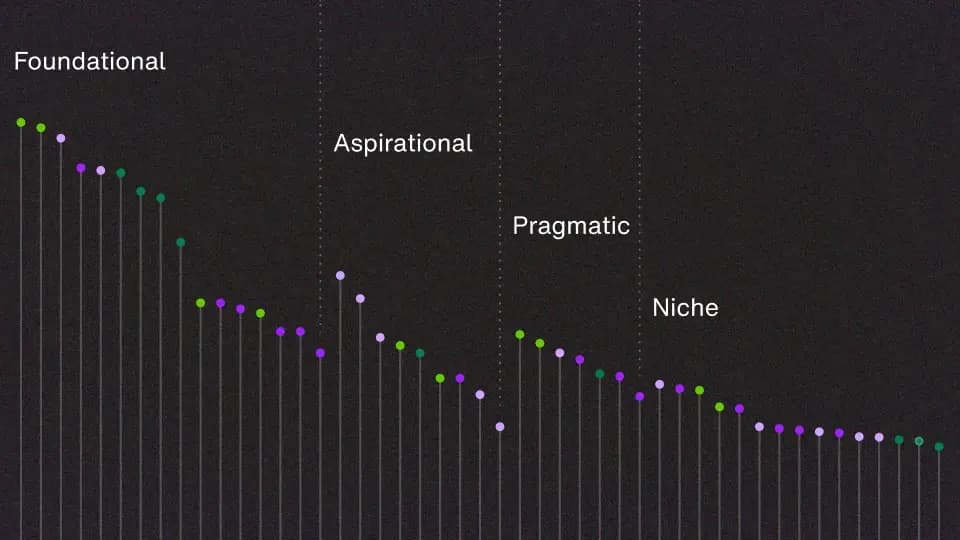
Our analysis of 47 AI interface building blocks provides evidence for key themes desired by users. Research reveals a hierarchy, ranging from the foundational elements necessary for these experiences to niche functionality that indicates user interest in more emotionally intelligent interactions.
- 3
Identify critical user mindsets and how they interact with one another
Our research revealed five key mindsets, which represent the distinct ways users group features together. These mindsets are not rigid personality types, but rather dynamic modes of interaction that users adopt in response to the task at hand.
What users want in an AI interface
Resonance score: A unified ranking of user desire
To create a single, unified ranking of all 47 AI interface building blocks, the team developed a composite resonance score. This score synthesizes three key data streams into a single value, allowing for a clear, future-forward prioritization of features.
The foundational blocks: Today's table stakes
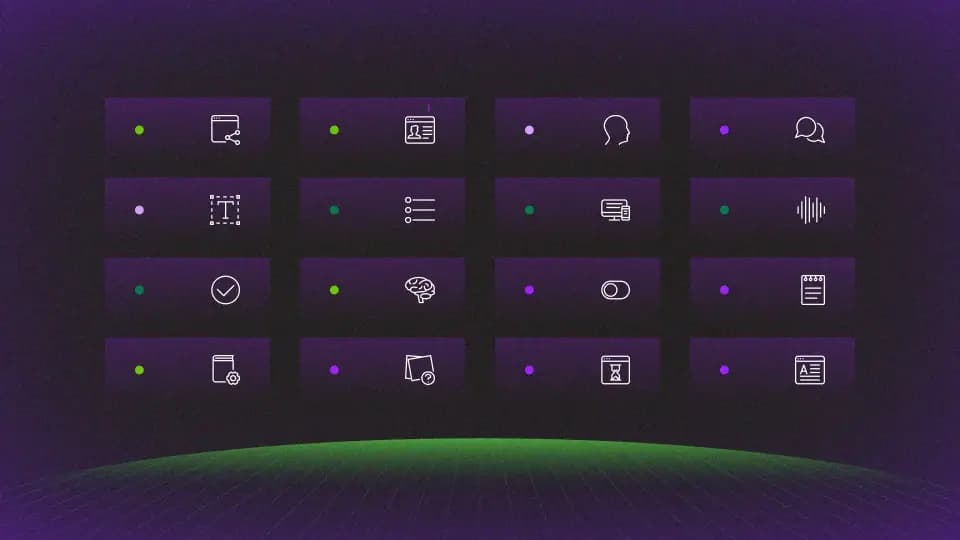
16 building blocks are the "must-haves" in future AI interfaces. They move beyond conversation to include personalization, control and action. Nearly 100% of users envision a highly integrated, user-aware AI that connects to external applications.

Opportunity roadmap building blocks
User data shows desire for these features in AI interfaces of 2030: aspirational features like biometric data unlock ambient experiences; pragmatic features like "show sources" are necessary for immediate usability and niche features point to specialized use cases.
Our research paints a clear and optimistic picture of the future of AI interfaces. Users are not only ready for AI that is more deeply integrated into their lives; they're actively excited about it.