Why limiting CX outsourcing to service delivery leaves revenue on the table, featuring IDC research

Key takeaways
- New research from IDC shows a disconnect: Enterprises want revenue growth from customer experience (CX) partnerships, but deploy them primarily on service delivery.
- Revenue-generating functions like sales, acquisition and expansion are outsourced at a fraction of the rate of service functions, despite requiring similar talent and technology capabilities.
- When contracts and KPIs center on service execution, partnerships naturally stay focused on reactive functions, regardless of the broader capabilities a top partner could bring.
- Integrating acquisition, service and expansion under one partner creates the data sharing and consistent customer experience that turns CX partnerships into revenue partnerships.
Ask enterprise leaders what they want from customer experience partnerships, and revenue growth is bound to come up. Look at what they actually outsource, and you’ll likely get a different story.
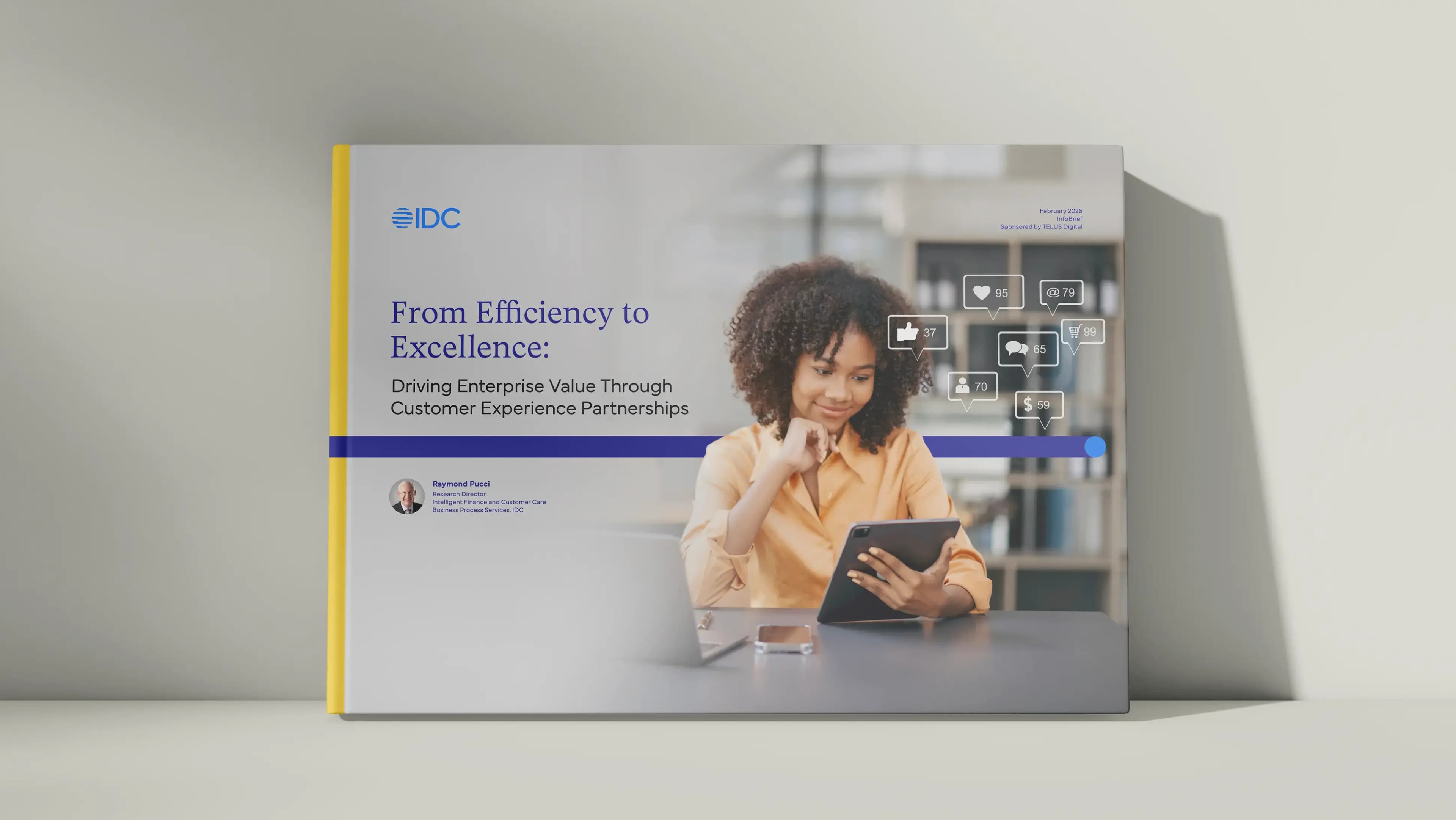
A new IDC InfoBrief sponsored by TELUS Digital reveals a consistent gap in how enterprises approach CX outsourcing. The resource, titled From Efficiency to Excellence: Driving Enterprise Value Through Customer Experience Partnerships*, includes survey results from 287 enterprise buyers and decision-makers across industries and company sizes. The research shows that service and support functions are outsourced at a much higher rate than revenue-generating functions.
IDC found:
- The most commonly outsourced CX functions are customer analytics (27%), tech support (24%), customer retention management (22%) and inbound customer service (20%).
- Revenue-generating functions like inbound B2B sales (17%), customer acquisition management (15%) and inbound B2C sales (9%) all trail well behind.
- Customer analytics is outsourced at three times the rate of inbound B2C sales.
The same research, however, shows revenue growth ranks second among the outcomes enterprises report from CX partnerships, behind only cost savings. That growth flows primarily from service functions like analytics, retention and support, rather than from the sales and acquisition functions designed to generate it directly. Put another way, enterprises are benefiting from their CX partnerships. They are just not yet fully leveraging them.
Speaking about the research, Robin Jakobsen, who leads product strategy for CXM at TELUS Digital, said, “Enterprises that treat CX and revenue as separate functions are limiting both. The most valuable partnerships are the ones that connect the full customer journey. The key isn’t just generating revenue, but retaining and growing it.”
This article examines why this pattern persists, what capabilities remain underutilized as a result, and what it can look like when enterprises deploy CX partners across the full customer lifecycle.
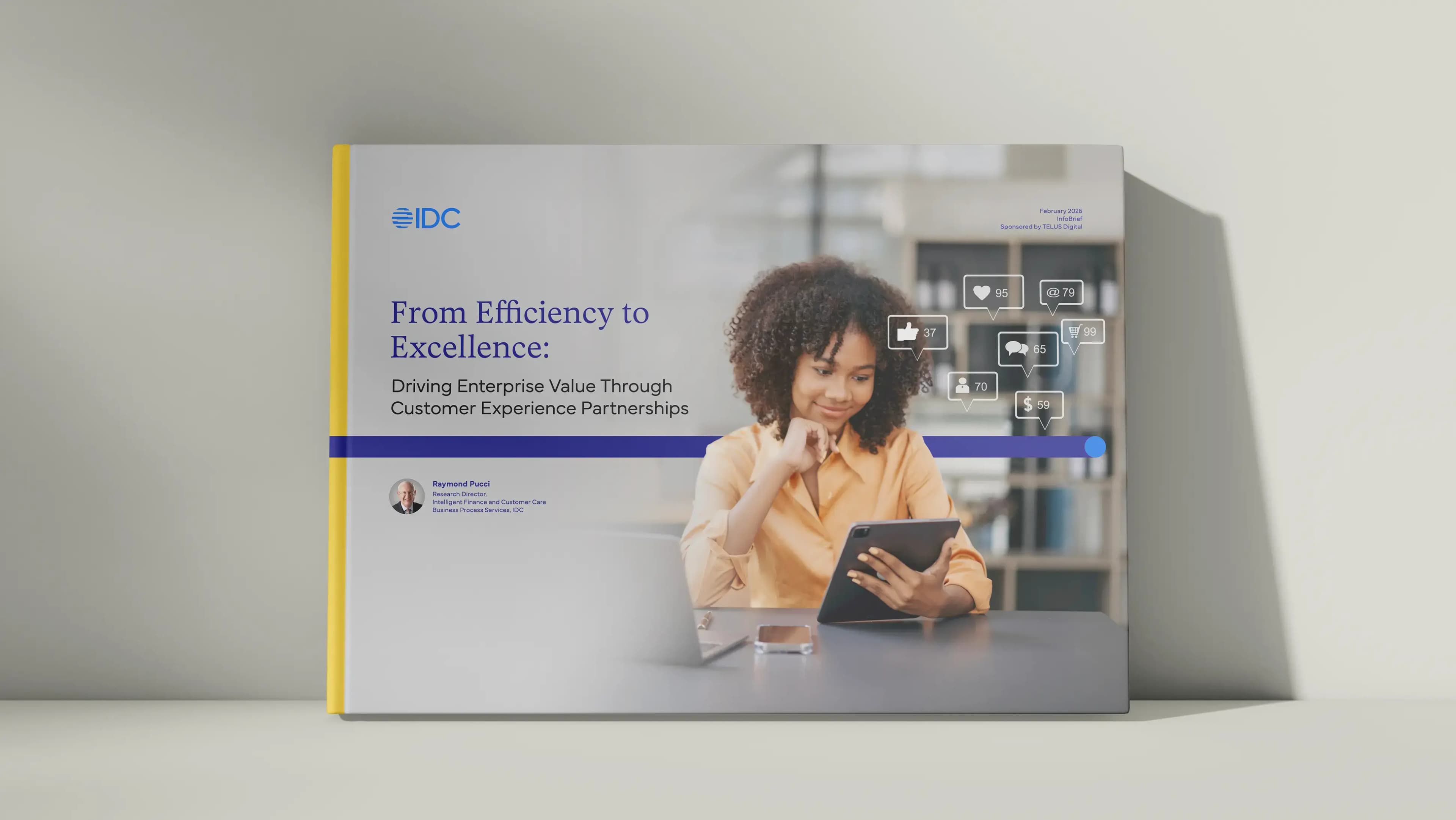
From Efficiency to Excellence: Driving Enterprise Value Through Customer Experience Partnerships

Revenue growth from CX outsourcing comes through service today, not sales
There’s no question that CX partnerships generate revenue. The real question is how much further they can go.
When enterprises outsource customer analytics, they gain visibility into behavioral patterns and churn signals. When they outsource retention management, they extend lifetime value. When they outsource tech support, they improve the customer experience in ways that drive loyalty and referrals. These are not small contributions by any means. Protecting and extending existing revenue is a meaningful business outcome, and one that top-tier CX outsourcing providers can help to deliver consistently.
The IDC research, however, points to a larger opportunity.
The InfoBrief’s author, Raymond Pucci, captured the tension: “Revenue growth ranks among the top business results organizations report achieving through CX partnerships, yet outsourcing remains concentrated in reactive support functions. The findings point to a gap between what enterprises want from a CX partner and what they delegate, highlighting a clear opportunity to rethink CX outsourcing strategies and expand them into revenue-driving programs.”
Protecting existing revenue and generating new revenue are different things. A CX partner that identifies a churn signal and saves a customer is doing valuable work. So is a partner that identifies expansion potential in an existing customer and acts on it. The point is not that one matters more than the other. It is that most enterprises are only asking their partners to do the first.
The reason lies in how enterprises select and structure these partnerships, and the decisions that keep them anchored to service delivery.
The defensive posture leaves revenue capabilities underutilized
Enterprises know what to look for in a CX partner. IDC’s research shows that the top criteria enterprises use to select CX partners are talent skills (24%), critical technologies (24%) and credible ROI examples (20%).
While these traits help CX leaders identify ideal partners for customer service outsourcing, they’re also exactly what’s needed to drive acquisition and expansion.
Take, for example, a situation where a customer contacts your support team with a question. A skilled agent, equipped with the right analytics, product knowledge and AI-powered tools, can go beyond the question itself and recognize the signals that indicate a customer is ready to expand. Trained to cross-sell and up-sell, trusted to act and equipped with visibility into that customer’s account history, the agent can deliver a personalized recommendation that feels like service, not sales.
Most enterprises, however, are not structured to make this happen.
CX partner selection criteria point to strategy, but contracts optimize for cost
The data reveals a telling contradiction. Enterprises say they want long-term, strategic partnerships — yet contract pricing outranks all other selection criteria. They say they value proactive advice, yet structure their partnerships around reactive service delivery. Transformation roadmaps rank as a selection criterion for just 15% of enterprises, despite transformation being exactly what most enterprises say they want from a CX partner.
“Enterprises are choosing CX partners for the talent, technology and analytics that can drive broader business value, but they’re still defining success primarily by delivery performance and operational metrics,” added Jakobsen.
The result is a defensive posture. Leaders optimize for cost control, short-term savings and risk mitigation. The capabilities that could drive acquisition and expansion sit underutilized.
The cost of keeping revenue functions separate
Service-only CX partnerships keep customers satisfied. But sometimes even satisfied customers leave. Without a deliberate effort to deepen customer relationships, satisfaction becomes a ceiling rather than a foundation. As a result, customers who could deliver greater lifetime value, refer others and commit to longer contracts remain transactional.
As Jakobsen put it: “When contracts and KPIs are centered on service execution and performance targets, partnerships tend to stay focused on reactive functions. The reality is the same expertise, data and AI that improve service performance can also power revenue-driving programs. When enterprises don’t make that connection, they miss a major revenue opportunity across customer acquisition and expansion.”
Deploying CX partners for intentional revenue growth
Leveraging the full capabilities of outsourcing partners requires that enterprises trust them to serve and sell. The ideal partner will have specialized sales capabilities across acquisition and expansion.
Below, we examine the practical applications of customer acquisition; how outsourcing customer success turns retention into growth.
What customer acquisition outsourcing looks like in practice
Customer acquisition outsourcing is about deploying partner talent, technology and analytics to win new customers through lead prioritization and qualification, inbound and outbound sales, and market expansion.
According to Bain & Company’s 2025 Commercial Excellence and Revenue Growth Agenda, 70% of companies don’t effectively integrate their sales plays into their technology, and only 20% have realized full value from their go-to-market investments. Many, it would seem, are unable to qualify and act on leads at scale and in a timely manner. Specialist partners close this gap by bringing MEDDIC-trained qualification teams, AI-powered research and sales assistance tools, dedicated inside sales specialists and revenue orchestration platforms to the table.
Jakobsen was emphatic about this. “Speed matters in sales. If you cannot act on a lead quickly, with the right information, you lose it. Most internal teams do not have the infrastructure to do that consistently. A specialist partner does.”
TELUS Digital’s work with a leading global fintech demonstrates the potential of customer acquisition outsourcing. Tasked with qualifying enterprise leads, the TELUS Digital team implemented the MEDDIC qualification framework, deployed an AI-powered research copilot to enable consultative selling and achieved 93% qualification accuracy, delivering 47.6% conversion rate growth and $121 million in operating net revenue. As a testament to the effectiveness of the program, TELUS Digital was recognized for this work with a Gold Stevie Award for Sales and Customer Service in the Demand Generation Program of the Year category.
Customer success outsourcing goes beyond retention
Outsourcing customer success is about growing existing customer relationships, not just retaining them. Most CX partnerships are structured for retention, not proactive expansion.
Deploying a partner on customer success management means using interaction data to identify expansion signals before customers raise their hand. It means tracking health scores, adoption rates and usage patterns to surface up-sell and cross-sell opportunities. And it means moving from reactive retention to proactive growth.
“The best thing that can happen in the customer journey is that you build product advocates. Sales teams become essential problem solvers, understanding how customer needs and usage patterns are evolving and anticipating what they may need next,” added Jakobsen.
Choose a CX partner built to serve and sell
The most significant opportunity comes when acquisition, service and expansion are managed by a single partner. “Customers don't see departments, they see brands,” asserted Jakobsen.
When one partner handles the full customer lifecycle, what the service team learns informs acquisition strategy, retention data signals when customers are ready to expand and insights are shared across every stage of the journey. Metrics shift from average handle time and CSAT to pipeline, conversion rates and lifetime value. The gap between what enterprises want from CX partnerships and what they get begins to close.
The IDC research shows the capabilities are already there — the talent, technology and track record enterprises select for are equally suited to winning new customers and growing existing ones.
TELUS Digital can help you get more out of outsourcing. With more than 80,000 specialists across 35 countries and a client base of over 600 global brands, we combine human expertise with AI-fueled technology to bring the scale, specialized sales capabilities and customer intelligence needed to move CX partnerships from service delivery to revenue growth.
Ready to close the gap? Contact our sales team today.
* IDC InfoBrief sponsored by TELUS Digital, From Efficiency to Excellence: Driving Enterprise Value Through Customer Experience Partnerships, #US54220426-IB, February 2026